
Squid Router - Cross-Chain Swap & Bridge for Web3
Cross-chain asset swapping and bridging, aggregating multi-chain liquidity
Introduction
Introduction to Squid Router
Squid Router is a cross-chain liquidity aggregation protocol designed to address the fragmentation of decentralized finance (DeFi) across multiple blockchains. It enables users to swap tokens seamlessly between over 50 different chains without needing to manually bridge assets or use centralized exchanges. Built on the Axelar Network, Squid leverages generalized message passing and decentralized validators to ensure secure cross-chain transactions. The platform integrates with major decentralized exchanges (DEXs) and bridging protocols, optimizing routes for the best rates and lowest slippage.
Core Functionality and Features
Squid’s primary feature is its cross-chain swap capability, which allows users to swap any token on one chain for any token on another chain in a single transaction. For example, a user can swap Ethereum-based USDC for Osmosis-based ATOM without intermediate steps. The router aggregates liquidity from various DEXs like Uniswap, PancakeSwap, and others, as well as bridging protocols like Axelar’s Satellite Bridge. This aggregation ensures competitive pricing and efficiency. Additionally, Squid supports cross-chain transfers for NFTs and governance tokens, expanding its utility beyond simple swaps.
Technology and Security
Squid Router relies on Axelar’s decentralized network for cross-chain communication, which uses a proof-of-stake consensus mechanism to secure transactions. This eliminates the need for centralized custodians, reducing counterparty risk. The protocol also incorporates slippage control, deadline settings, and transaction tracking to enhance user experience and security. Smart contracts are audited by leading firms like CertiK, providing additional confidence in the protocol’s reliability.
User Experience and Interface
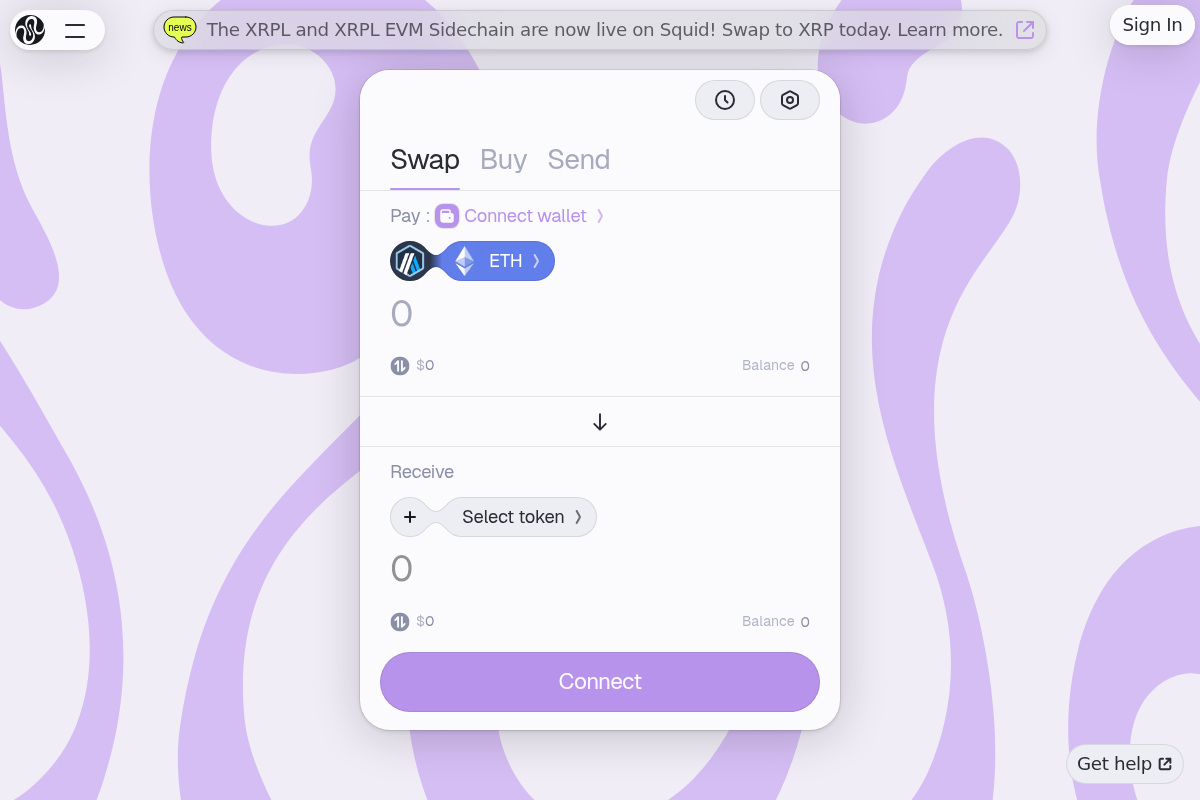
The web application (app.squidrouter.com) features a clean, intuitive interface similar to popular DEXs. Users connect their wallets (e.g., MetaMask, Keplr), select source and destination chains, choose tokens, and execute swaps with real-time rate estimates. The platform also offers a developer API, allowing projects to integrate cross-chain functionality into their own dApps. This has led to adoption by major wallets and DeFi platforms, enhancing its accessibility.
Market Position and Competitors
Squid competes with other cross-chain bridges and routers like LayerZero, Wormhole, and Socket. However, its deep integration with Axelar and Cosmos ecosystems gives it an edge in interoperability between Ethereum Virtual Machine (EVM) and non-EVM chains. Its focus on liquidity aggregation rather than just bridging sets it apart, offering a more comprehensive solution for DeFi users.
Conclusion and Future Outlook
Squid Router is a critical infrastructure project for the multi-chain future of Web3. By simplifying cross-chain transactions, it reduces barriers to accessing liquidity across ecosystems. Future developments may include support for more chains, enhanced liquidity pools, and improved transaction speeds. As DeFi continues to evolve, Squid’s role in enabling seamless interoperability will likely grow in importance.


