
Liquid
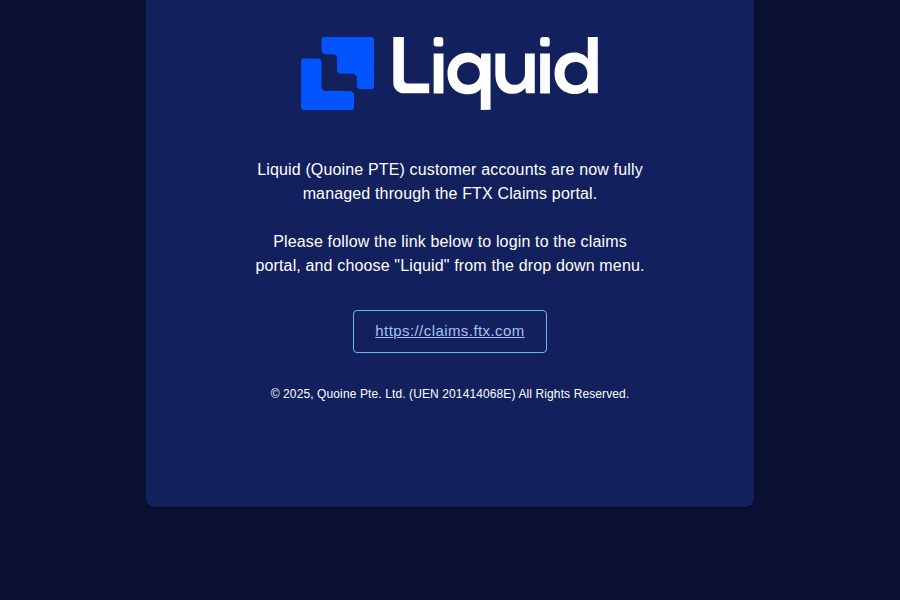
Licensed crypto exchange with multi-language support and high liquidity
Introduction
**Overview of Liquid Exchange**
Liquid is a globally operating cryptocurrency exchange established in 2014, originally known as Quoine. The platform has evolved into a comprehensive digital asset ecosystem, offering services ranging from spot trading to advanced financial products. It caters to a wide audience, including retail traders, institutional investors, and Web3 adopters, with a presence in multiple jurisdictions despite regulatory challenges in some regions.
**Trading Products and Services**
The core offering includes spot trading with a wide selection of cryptocurrencies, including major tokens like Bitcoin and Ethereum, as well as altcoins. Liquid stands out with its derivatives market, providing perpetual swaps and futures contracts with leverage. Additionally, it offers staking and earning products, allowing users to generate yield on their assets. The platform supports fiat on-ramps through bank transfers and credit cards, enhancing accessibility.
**Technology and Security**
Liquid employs a robust matching engine capable of handling high-frequency trades, ensuring liquidity and minimal slippage. Security measures include cold storage for funds, two-factor authentication (2FA), and compliance with regulatory standards like KYC/AML. The interface is designed to be intuitive for beginners while offering advanced charting tools (via TradingView) and API access for professional traders.
**Liquid Token and Ecosystem**
The platform utilizes its native utility token, LQDT (formerly QASH), which provides benefits such as reduced trading fees and access to exclusive services. However, the token's utility and adoption have faced challenges due to market conditions and shifting platform strategies. Liquid integrates with Web3 trends by supporting crypto-backed loans and exploring decentralized finance (DeFi) partnerships.
**Competitive Analysis**
Liquid competes with major exchanges like Binance and Coinbase by emphasizing derivatives and institutional servic


