
Allbridge - Cross-Chain Token Transfers & Swaps
Cross-chain bridge protocol for multi-chain asset transfers and swaps
Introduction
Introduction to Allbridge: Allbridge is a decentralized cross-chain bridge designed to facilitate token transfers and swaps between different blockchain networks. It aims to solve the problem of blockchain isolation by enabling seamless movement of assets across ecosystems such as Ethereum, Solana, Binance Smart Chain (BSC), Polygon, and others. As interoperability becomes increasingly critical in the Web3 space, Allbridge positions itself as a key infrastructure component for decentralized finance (DeFi) and broader blockchain adoption.
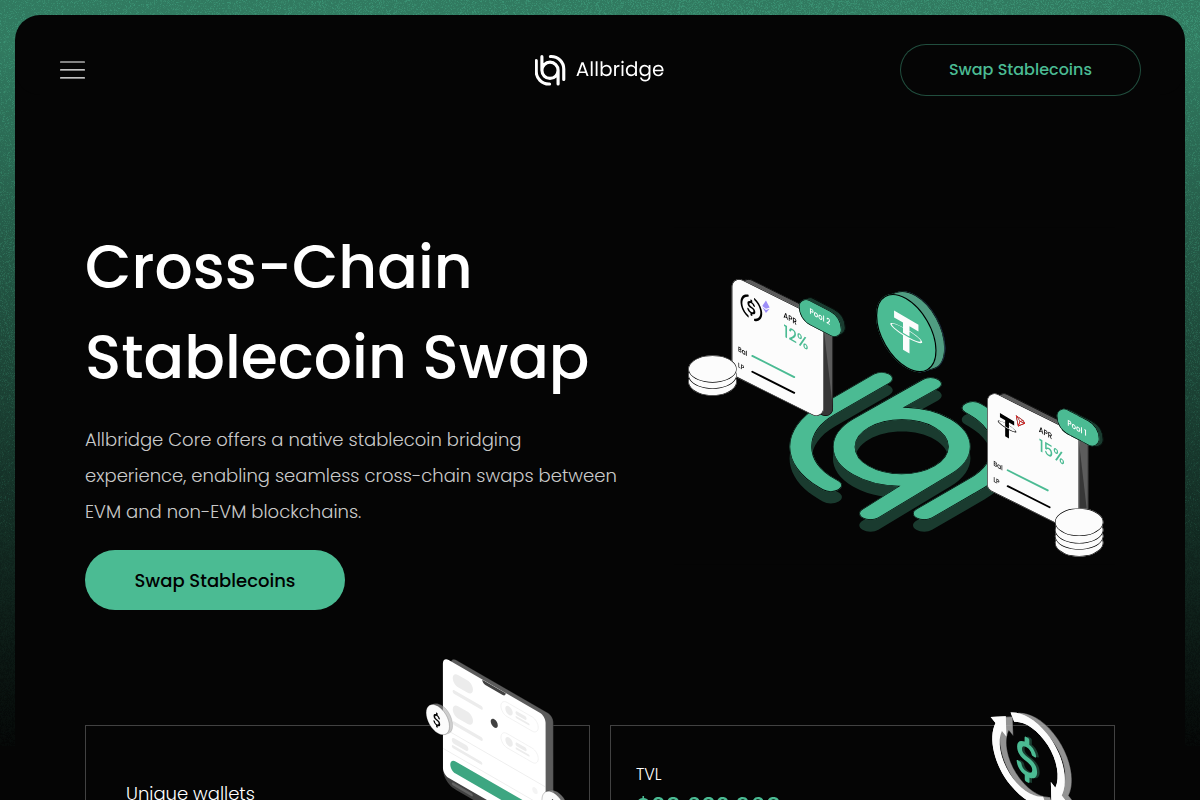
Technology and Features: Allbridge utilizes a combination of smart contracts and oracles to secure cross-chain transactions. It supports both native and wrapped assets, allowing users to transfer tokens quickly and at low costs. The platform emphasizes ease of use, with a simple interface for connecting wallets and initiating transfers. Additionally, Allbridge offers a swap feature, enabling users to exchange assets across chains without centralized intermediaries. This functionality is vital for arbitrage, liquidity provision, and accessing diverse DeFi protocols.
Security Measures: Security is a top priority for Allbridge, given the risks associated with cross-chain bridges, such as smart contract vulnerabilities and oracle failures. The platform employs audits from reputable firms and implements multi-signature mechanisms to protect funds. However, like all bridges, it remains susceptible to emerging threats, and users should exercise caution. Allbridge continuously updates its protocols to address potential risks and maintain trust.
Market Position and Competition: Allbridge operates in a competitive landscape with rivals like Multichain (formerly Anyswap), Wormhole, and Synapse. Its differentiation lies in its support for lesser-known blockchains and focus on user experience. By integrating with emerging networks, Allbridge attracts niche communities and expands its utility. The platform also partners with various DeFi projects to enhance liquidity and usability, strengthening its ecosystem presence.
User Experience and Accessibility: The Allbridge website and dApp are designed for simplicity, catering to both beginners and advanced users. Steps involve selecting source and destination chains, connecting a wallet, and confirming transactions. Gas fees and transfer times are clearly displayed, reducing uncertainty. Mobile compatibility and tutorials further improve accessibility, making cross-chain operations more approachable.
Challenges and Opportunities: Allbridge faces challenges such as regulatory uncertainty and technical complexities in cross-chain communication. However, the growing demand for interoperability presents significant opportunities. Expanding to more blockchains, integrating with Layer 2 solutions, and offering advanced features like cross-chain lending could drive future growth. Community engagement and transparency will be crucial for long-term success.
Conclusion: Allbridge is a promising player in the Web3 interoperability sector, providing essential services for asset transfer and swaps. Its commitment to security, multi-chain support, and user-friendly design makes it a valuable tool for DeFi participants. While competition is fierce, Allbridge's niche focus and continuous innovation position it well for the evolving blockchain landscape.


